
Yesterday Today and Tomorrow: Planting & Care in Port St. Lucie, FL
Planting guidance for Port St. Lucie & St. Lucie County, Florida
Practical tips for choosing Brunfelsia pauciflora in your landscape.
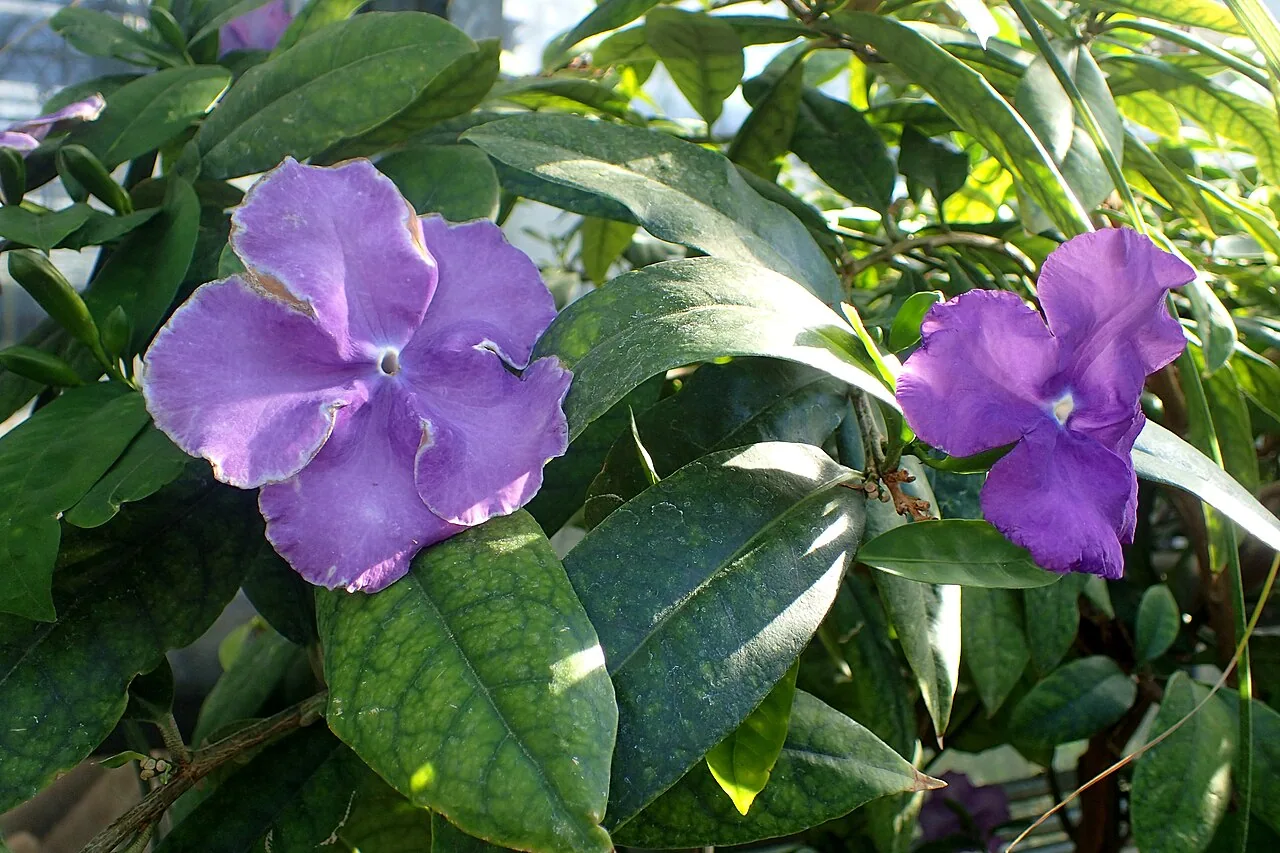

Thinking about Yesterday Today and Tomorrow for a yard in Port St. Lucie? Known for flowers that change from purple to lavender to white, Brunfelsia pauciflora can make a memorable addition when the location suits its needs. Before buying, compare your property’s light, rainfall runoff and usable bed width with the plant’s natural form.
Is Yesterday Today and Tomorrow a good choice for Port St. Lucie?
For Yesterday Today and Tomorrow, start with partial shade with bright light and even moisture and organic mulch. Florida landscapes often combine sandy soils, strong summer rain, dry spells, reflected heat from driveways, and occasional winter cold. The same plant can look very different in a shaded courtyard than beside hot pavement. Flowering plants may bloom less in the wrong light or when sheared too frequently.
This ornamental should be assessed for its local performance and site needs; an attractive nursery plant is not automatically the right plant for every Florida yard. Before purchasing, examine the exact cultivar and the nursery’s size information: a species name does not guarantee that every selection grows to the same dimensions.
Where to plant Yesterday Today and Tomorrow in a front yard
One promising use is a sheltered, lightly shaded patio border. Consider how the plant looks from the sidewalk and from the home’s entry. The most effective landscape is usually not the one with the largest number of species; it is the one with clear repetition, easy access for maintenance and enough room for growth.
For flowering coverage, A staggered line can soften a foundation without hiding windows. Mix taller forms behind compact flowering plants. Keep new plants away from air-conditioning equipment, downspouts and maintenance access, and check HOA landscape rules before making substantial changes.
Light, watering, mulch and ongoing care
Sun: Partial shade with bright light. Water and soil: Even moisture and organic mulch. Water new plants according to weather and root-zone moisture rather than using one fixed schedule for every species. Aim water at the root zone, and avoid keeping the area continually saturated unless this is a species selected for wet conditions.
Use mulch to help moderate soil moisture, but keep it pulled away from stems, crowns and trunks. Check for pests and nutrient problems before automatically adding fertilizer. A soil test is especially useful where fill dirt, irrigation water or high-pH soil can change plant performance. Keep away from pets and children; parts of the plant are toxic.
One mistake to avoid
Hot dry reflected sites and unsupervised pet access. This is the sort of detail to plan for before installation, not after the planting bed is complete. Also avoid treating all flowering shrubs or groundcovers the same way: mature dimensions, pruning timing and irrigation requirements may be very different.
Before finalizing a layout, sketch the driveway, walks, windows and irrigation heads. That makes it easier to place Brunfelsia pauciflora where it can be enjoyed without creating a maintenance obstacle.
Frequently asked questions
How much sunlight does Yesterday Today and Tomorrow need?
Partial shade with bright light. Watch the bed at morning, midday and late afternoon because a location can shift from bright shade to intense sun over the day.
What should I check before planting Yesterday Today and Tomorrow?
Confirm drainage, usable width, source and cultivar, and the seasonal water needs. For this plant, an especially useful reminder is: keep away from pets and children; parts of the plant are toxic.
Planning a planting bed in Port St. Lucie?
Lex Groundworks LLC helps customers with plants, mulch, decorative rock and landscape bed improvements. Tell us what the area gets for sunlight and what look you want to achieve.
General planting guidance is informed by Florida-Friendly Landscaping principles. A local soil test, site inspection, and current UF/IFAS advice are more reliable than a one-size-fits-all schedule.